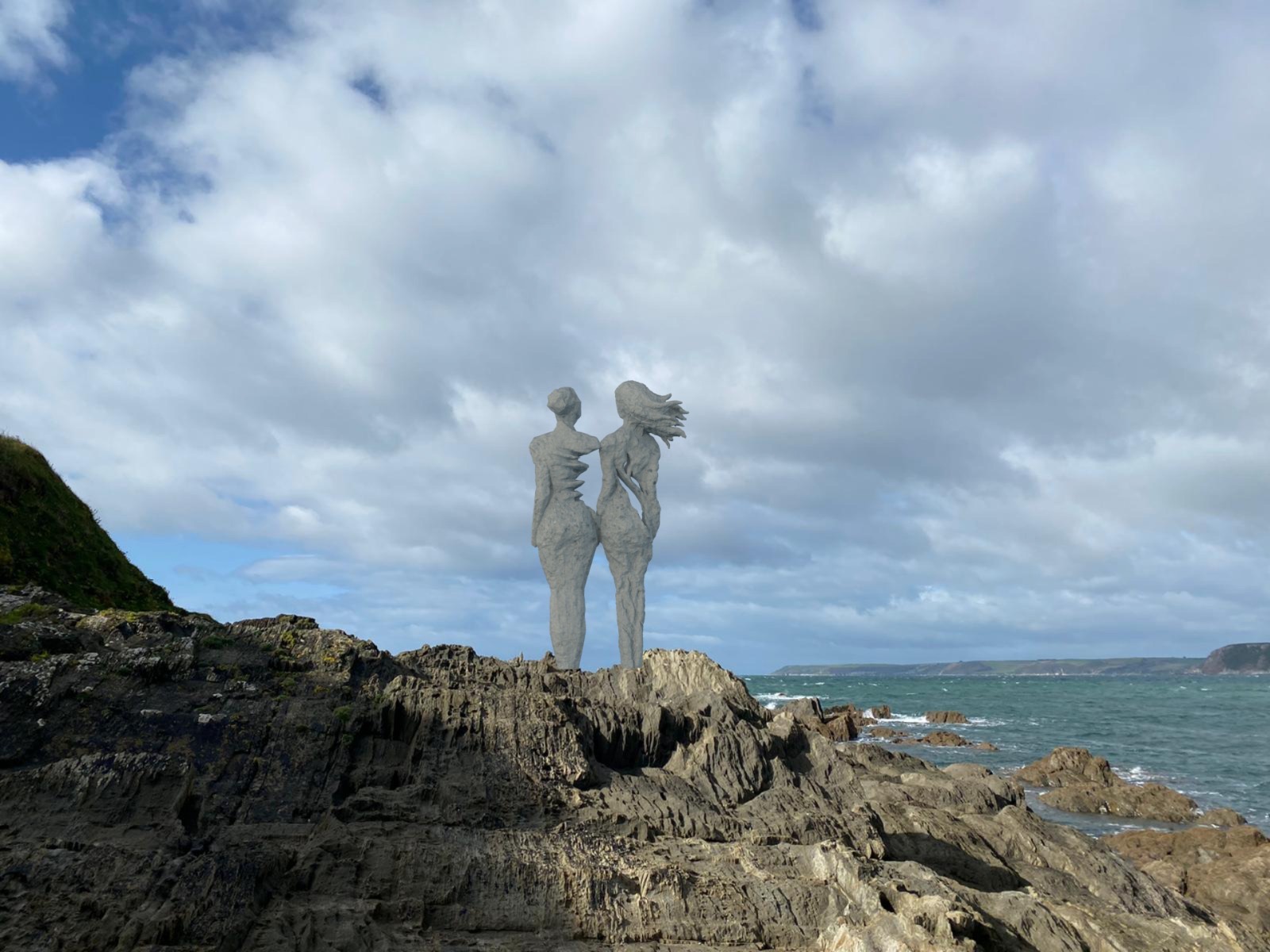
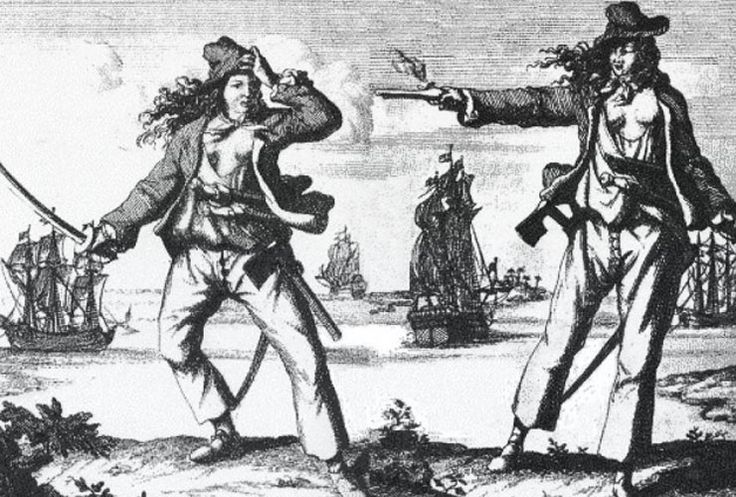
The fiery story of Anne Bonny and Mary Read was one that had laid buried for centuries. The two pirates were famed for leaving a trail of looted treasure and treacherous ex-lovers behind them. The women’s fierce alliance swelled across the high seas, a tempest of courage, adventure and rebellion.
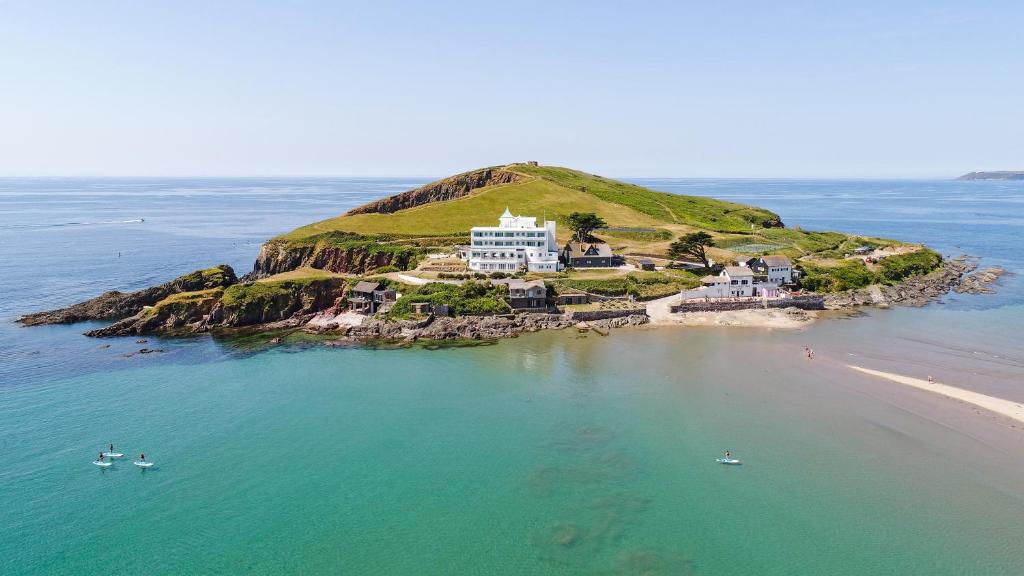
Amanda Cotton‘s sculpture ‘Inexorable’ depicts the defiant duo, and is inspired by the legend of these two infamous 18th Century pirates and smugglers. The sculpture would be placed on Burgh Island off the coast of Cornwall, a place that is interwoven with the history of piracy, and the battle against it.
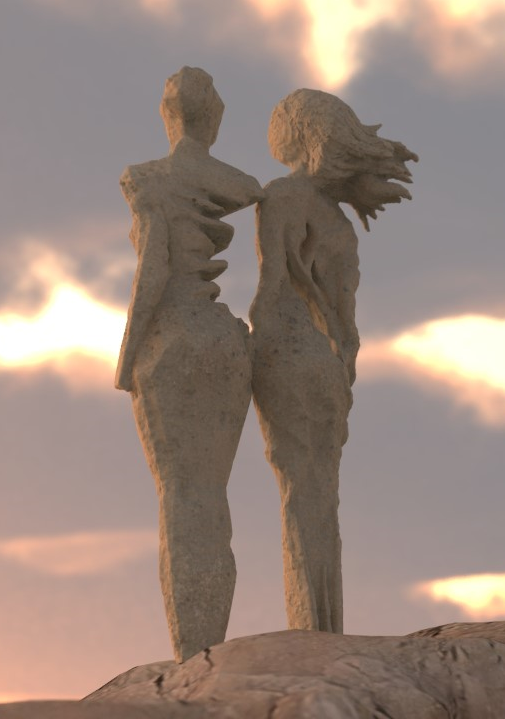
Amanda Cotton approached Thom Bridle of Studio 43 to develop the design and construct it (Studio 43 are a company that builds complicated large scale 3D art works). Studio 43 approached us to carry out the structural engineering design. We would need to make sure the sculpture could withstand the corrosive elements of the sea, and resist the considerable force of coastal storms. The sculpture would be made of concrete, so designing it as reinforced concrete, with embedded steel bars, would be within the normal scope of structural engineering.

The difficulty would be casting the sculpture into the exposed rock at Burgh Island. Firstly, it would be a difficult construction task in the middle of winter, exposed to sea spray and the weather, for both the workers and the setting and curing materials. Secondly, it would be difficult to find a resin that can secure the sculpture’s reinforcement down into the island’s rock, and also design for the uncertainties in the rock. The rock could be fissured, breakable or just very weak.
There are no resins that are designed for natural rock and we had no idea how strong the rock was, or if it has any hidden faults. We spoke to resin specialists and had a plan on how to do it with confidence, controlling and allowing for the uncertainties, but before we could develop the plan the sculpture was rejected for planning permission.
We contributed a concept design to support the planning application. This wasn’t wholly necessary, but it would show to the Council that the sculpture could be built and that this was a serious consideration. Unfortunately the sculpture was rejected due to a negative public reaction to piracy.
Despite the planning permission rejection the artist would be able to site it elsewhere, so we went ahead and completed the design for the sculpture. We had to make sure the sculpture would be durable and long lasting, structurally stable and buildable.
Using steel bars bent to the shape of the sculpture and cast into the concrete would have been difficult because of the sculpture’s complex shape. We needed to work out another way to reinforce the concrete. Thom came up with the idea of cutting steel plates the shapes the reinforcement needs to be to fit the sculpture. With Studio 43’s facilities, laser cutting complex shapes was simple – something that would be inconceivable in normal construction practice became the obvious choice.
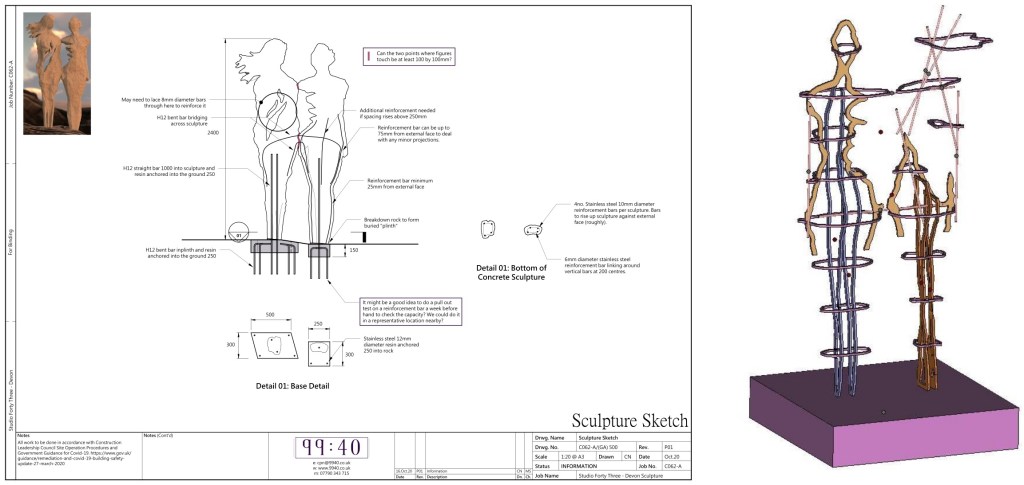
We had to also make sure that nothing cast into the concrete, of which there was many metals and minerals that the artist wanted to cast into each figure, would unduly react with the concrete or reinforcement, or each other.
The sculpture would also need to be movable now, because the artist wanted to move it around the country, so it would need to be built with a concrete base. The concrete base would need to spread the load of the sculpture out to not be too heavy for the ground. It would also need to be broad enough to stop the sculpture toppling over.
 99:40
99:40 